
proprietary trading firms (or "prop firms") are at the forefront of financial markets, earning profits through sophisticated strategies and unparalleled capital management. But how exactly do these firms deploy their capital to generate maximum returns? By leveraging advanced tools, disciplined risk management, and data-driven decisions, prop firms continuously innovate to stay ahead of the curve.
This article unpacks the strategies these firms use to effectively manage resources and drive exceptional profitability, offering insights into an industry that thrives on precision and expertise.
The Core Purpose of Proprietary Trading Firms
Unlike traditional investment firms that manage client funds, proprietary trading firms use their own money to trade. These firms profit directly from market movements, making them highly motivated to optimize their capital deployment. Their unique structure allows them flexibility and agility, which are key to capitalizing on market opportunities.
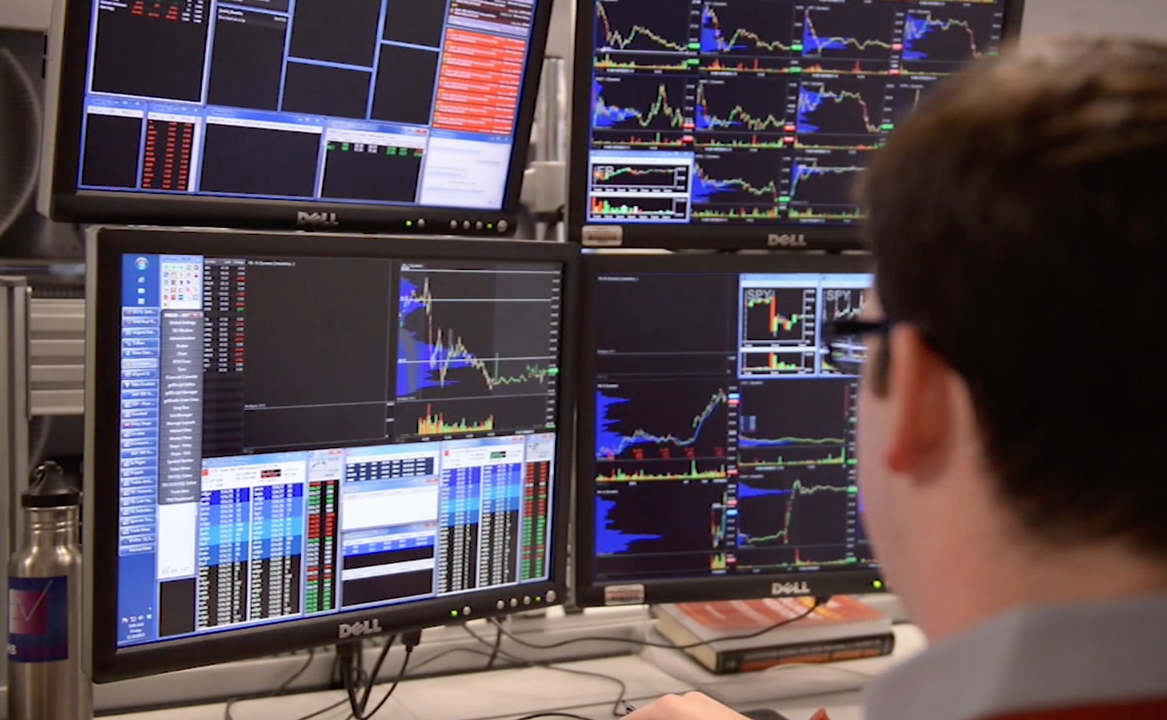
Their underlying objective is simple yet challenging—to achieve high returns on investment while mitigating risks. Whether trading equities, foreign exchange, or derivatives, prop firms are laser-focused on efficiency and profitability.
Data-Driven Decision-Making
At the heart of every successful proprietary trading firm is a robust reliance on data. These firms access and analyze massive amounts of market data in real time. Using advanced algorithms, machine learning, and predictive models, they identify trends, anomalies, and high-probability opportunities.
For example:
- Algorithmic Trading: Prop firms often rely on algorithms to execute trades with precision and speed that humans cannot match. These algorithms are fine-tuned using historical data and updated regularly to account for evolving market conditions.
- Quantitative Analysis: Many firms also employ quantitative strategies, where analysts and mathematicians develop models to predict price movements or optimize portfolios.
Decision-making is backed by rigorous data analysis to minimize human error and amplify profit-generating opportunities.
Leveraging Technology for Competitive Advantage
Technology plays a pivotal role in maximizing the profitability of proprietary trading firms. High-frequency trading (HFT), for instance, uses cutting-edge systems to execute trades in microseconds, capitalizing on even the smallest price discrepancies. These firms have access to:
- Custom Trading Platforms for seamless execution.
- Machine Learning Models to predict and adapt to market changes.
- Cloud Computing for fast, scalable data storage and processing.
Every technological tool is carefully selected to optimize capital deployment and maintain a competitive edge in high-stakes markets.
Managing Risks Effectively
Risk management is the backbone of sustainable profitability in proprietary trading. Firms employ strict protocols to protect their capital, including:
- Diversification: This reduces exposure to any single market or asset, spreading risk across multiple instruments and geographies.
- Stop-Loss Mechanisms: Automated stop-loss orders help limit potential losses by exiting trades when the market moves unfavorably.
- Position Sizing: Allocating only a specific percentage of capital per trade ensures losses are minimized while profits are maximized.
By combining these risk management strategies, businesses can better withstand volatile market conditions while remaining profit-focused.
Innovative Capital Deployment Strategies
Proprietary trading firms are constantly innovating in how they deploy their capital effectively:
- Market Arbitrage: Taking advantage of price differences between markets or instruments for risk-free profits.
- Leverage: Using borrowed funds to amplify returns, provided the risk is carefully managed.
- Momentum Trading: Deploying capital into assets that are trending, with the expectation of continuation in the same direction.
These strategies require precision and adaptability to market changes. Only firms with disciplined approaches and clear methodologies succeed.
Building a Strong Talent Pool
While advanced technology and data are critical, the human element remains integral to proprietary trading success. Firms invest heavily in hiring and training top talent, fostering expertise in quantitative finance, coding, and analysis. High-caliber individuals are entrusted to innovate strategies and fine-tune capital deployment practices.
The Takeaway
Proprietary trading firms masterfully balance risk, data-driven strategies, innovative technologies, and skilled professionals to maximize their capital efficiency. This dynamic interplay ensures they stay ahead of competition and continue generating consistent profits in an environment where market volatility is the norm.
By continuously adapting to technological advances and market conditions, these firms remain benchmarks of agility and maximized performance in the financial landscape.