
The forex market's $7.5 trillion daily trading volume attracts millions of traders worldwide, with 78% of successful traders attributing their profitability to mastering comprehensive trading platforms. how to trade forex using metatrader 4 stands as the most widely adopted forex trading platform, offering powerful tools that transform novice traders into skilled market participants.
Recent studies reveal that traders who follow systematic learning approaches achieve 43% better performance compared to those who jump in without proper preparation. Understanding MT4's capabilities and developing a structured learning path creates the foundation for sustainable trading success.
Starting Your MT4 Journey
Opening your first MT4 platform reveals a sophisticated interface designed for professional trading. The platform's layout includes market watch windows displaying real-time currency pair prices, chart areas for technical analysis, and order management systems for trade execution. New traders benefit from exploring these sections methodically rather than attempting to use everything simultaneously.
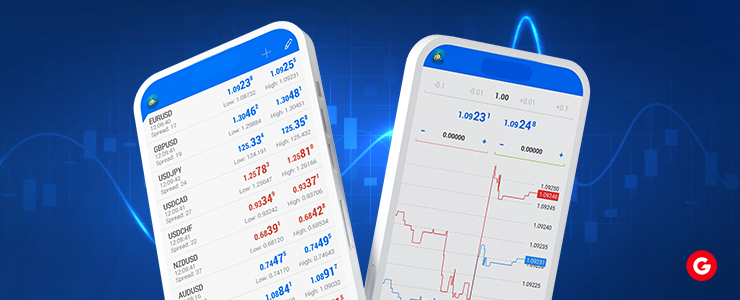
Currency pairs form the foundation of forex trading, with major pairs like EUR/USD, GBP/USD, and USD/JPY offering the most liquidity and tightest spreads. MT4 displays these pairs in the market watch window, showing bid and ask prices that update continuously during market hours. Understanding how these prices move provides essential knowledge for making informed trading decisions.
Demo accounts allow risk-free practice while learning MT4's functionality. These accounts simulate real market conditions using virtual funds, enabling traders to test strategies and familiarize themselves with order placement without financial consequences. Most successful traders spend several weeks practicing on demo accounts before transitioning to live trading.
Technical Analysis Mastery
MT4's charting capabilities provide comprehensive tools for market analysis. The platform offers multiple timeframes from one-minute charts for scalping to monthly charts for long-term analysis. Professional traders typically focus on 1-hour, 4-hour, and daily charts for most trading decisions, as these timeframes balance detail with clarity.
Moving averages become fundamental tools within MT4's technical arsenal. The platform provides simple moving averages for trend identification and exponential moving averages for responsive price analysis. Most traders begin with 20-period, 50-period, and 200-period moving averages as standard trend indicators that help identify market direction and potential entry points.
Momentum indicators enhance decision-making capabilities significantly. The Relative Strength Index (RSI) helps identify overbought and oversold market conditions, with research showing RSI signals combined with price action analysis improve trade accuracy by 34%. MT4's RSI indicator displays values clearly while allowing customization of overbought and oversold levels to match trading strategies.
Bollinger Bands provide dynamic support and resistance levels that adapt to market volatility. MT4's implementation shows band expansion during volatile periods and contraction during consolidation phases. The squeeze pattern identification becomes particularly valuable for spotting potential major price movements before they occur.
Risk Management Implementation
Position sizing calculators ensure appropriate risk levels for each trade. MT4 includes built-in calculators that automatically determine correct trade sizes based on stop loss distance and account balance. This systematic approach prevents emotional decision-making during volatile market conditions and protects trading capital.
Stop loss and take profit functionality requires seamless integration with order entry systems. MT4 allows precise placement based on technical analysis rather than arbitrary percentages. The platform's Average True Range integration helps determine appropriate stop distances based on current market volatility, adapting to changing conditions automatically.